

Events
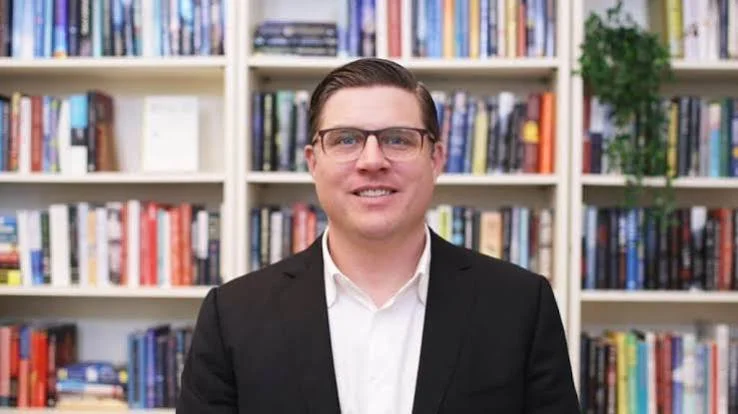
Moderated by Marci Reichert, Harvard-Westlake School’s Director of Wellness.


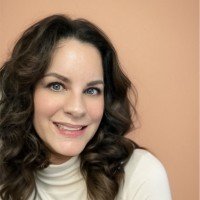
Moderated by Sarah Huss, Director of Parent Education and Human Development at Campbell Hall School.

Moderated by Rebecca Heller, EdD, Director of Student Wellness at Viewpoint School.

SSALA Speaker Series 2026-2027
Registration links available via Member Schools and SSALA Representatives. All times Pacific. Current as of 1 September 2026.
22 September 2026 at 7:00PM
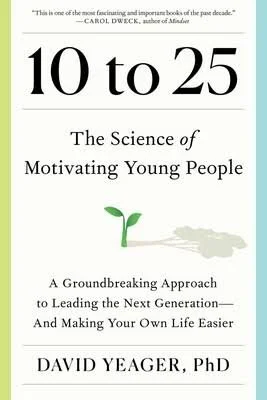
Dr. David Yeager, The Science of Motivating Young People.
Imagine a world in which Gen Xers, millennials, and boomers interact with young people in ways that leave them feeling inspired, enthusiastic, and ready to contribute. That world may be closer than you think. Using cutting edge research, best-selling author and psychologist David Yeager explains how to stop fearing young people’s brains and hormones and how to start harnessing them.
Neuroscientists have discovered that around age ten, puberty spurs the brain to crave socially rewarding experiences, such as pride, admiration, and respect, and to become highly averse to social pain, such as humiliation or shame. As a result, young people are subtly reading between the lines of everything we say, trying to interpret the hidden implications of our words to find out if we are disrespecting or honoring them. Surprisingly, this sensitivity to status and respect continues into the mid-twenties. David’s research helps adults develop an ear for ways to respect young people and avoid frustrating patterns of miscommunication and conflict.
David Yeager, PhD, is a professor of psychology at the University of Texas at Austin and the cofounder of the Texas Behavioral Science and Policy Institute. He is best known for his research conducted with Carol Dweck, Angela Duckworth, and Greg Walton on short but powerful interventions that influence adolescent behaviors such as motivation, engagement, healthy eating, bullying, stress, mental health, and more. Prior to his career as a scientist, he was a middle school teacher and a basketball coach. He earned his PhD and MA at Stanford University and his BA and MEd at the University of Notre Dame.
Two Different Webinars with Dr. Catherine Knibbs:
9 December 2026 at Noon
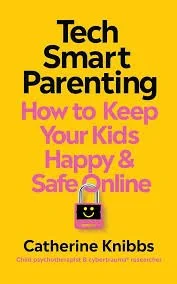
Dr. Catherine Knibbs, Tech Smart Parenting. Empowering parents with tools to navigate screen time and online environments with their children Pre-K - 12th grade.
Child psychotherapist and cybertrauma expert Catherine Knibbs has helped hundreds of families work together to build healthy boundaries around technology. In this science-backed guide, Knibbs sets out what the evidence really says about the risks and where your fears may be misguided, to empower you with the answers to make the right decisions for your family. You'll discover: How screens affect every stage of childhood and where the dangers actually lie. The importance of keeping your child close and onside to protect them, with scripts to help you communicate positively and set reasonable boundaries. Realistic advice to keep your child safe and develop a balanced relationship with technology, within and out of the home. Tips on protecting neurodivergent children and understanding how tech can help them flourish.
Grounded in evidence and full of relatable stories and practical tools, Tech-Smart Parenting is essential for any parent who wants to feel informed and confident in navigating the new digital childhood.
10 December 2026 at Noon
Dr. Catherine Knibbs, Cyberbullying. Please be advised that this second session with Dr. Knibbs will cover topics that may be emotionally challenging.
For parents seeking a deeper dive into the ages and stages of online bullying and cyber trauma. Curated with your specific questions and offering a live Q&A to discuss what parents may be shy to ask about but what is important to know. Moderated by Sarah Huss, Director of Parent Education and Human Development at Campbell Hall, please be advised that this second session with Dr. Knibbs will cover topics that may be emotionally challenging.
26 January 2027, in-person at Berkeley Hall School, 9:30AM - 11:30AM, live-streamed and recorded
Vanessa Kroll Bennett, TEENHOOD: Sanity-saving Lessons for the Trickiest Phase of Parenting
Free copies of her new book for in-person attendees. National bestselling author, podcaster, and speaker who helps adults raise tweens and teens with joy. She is co-author of the bestselling book This Is So Awkward: Modern Puberty Explained, co-host of the This Is So Awkward podcast, and Co-founder of Less Awkward, a company dedicated to making growing up more comfortable. She is the author of the forthcoming book Teenhood: Confessions & Lessons for the Trickiest Phase of Parenting. Vanessa was the founder of Dynamo Girl, a company focused on building kids’ self-esteem through sports and puberty education. She is a graduate of Wellesley College and holds a Masters in Jewish History, but perhaps her most important schooling comes from raising her own four children, ages 15 to 23.
9 March 2027 at 7:00PM
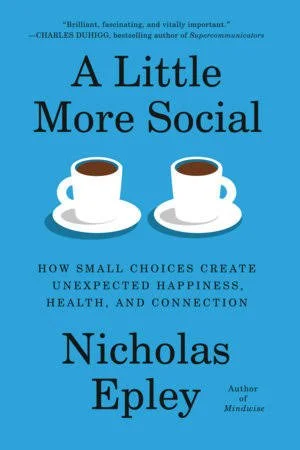
Dr. Nicholas Epley, Human Connection in the Digital Age
We know that social connection enriches our lives—so why do we hesitate to connect? There is a fundamental paradox at the core of human life. We are a highly social species uniquely equipped to connect with other people and doing so is better for us. Yet we so often choose to be unsocial. We avoid talking to the stranger who sits next to us. We struggle to move beyond small talk with an acquaintance. We are reluctant to express our gratitude to people we appreciate. Every day, we avoid opportunities to connect with strangers, neighbors, colleagues, friends, and family. By missing those moments, we miss out on all the benefits of a more social life—one that is happier and healthier for everyone.
University of Chicago psychologist and author of Mindwise, Nicholas Epley has spent his career studying the way we connect, and he has found that our social fears often keep us from reaching out. But bridging the gap between two people is easier than we think—and success is more likely than we imagine. We just have to be a little more social.
Epley draws on decades of research, his own experiences, and the stories of everyday people to deliver groundbreaking conclusions about the psychology behind our social decisions. A Little More Social shows how we can put science into practice and change our lives, one small choice at a time.
Registration required via Member School and all times are Pacific. SSALA events are recorded for our Member Schools, availability varies per speaker.
Past Events
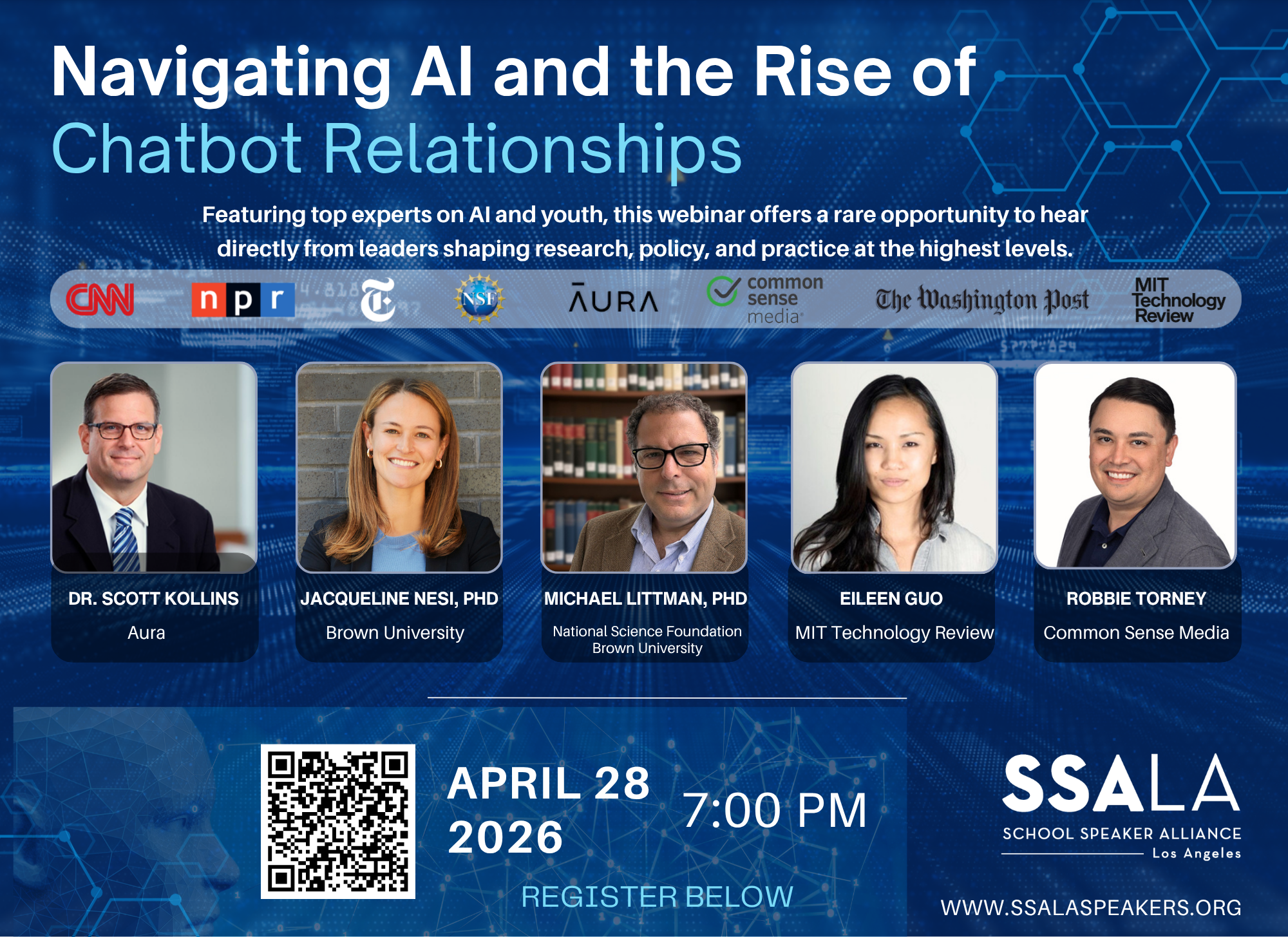
Navigating Artificial Intelligence and the Rise of Chat-Bot Relationships
Featuring top experts on AI and youth, this webinar offers a rare opportunity to hear directly from leaders shaping research, policy, and practice at the highest levels. Together, they will explore how chatbot relationships are shaping young people’s social development, mental health, and learning, and how adults can respond with thoughtful guidance and appropriate boundaries. Including Michael Littman, former AI division director at the National Science Foundation; Jacqueline Nesi, widely recognized expert on youth mental health and technology whose work has been featured in The New York Times, The Wall Street Journal, and CNN; Robbie Torney of Common Sense Media, the nation’s leading nonprofit for kids’ media and technology guidance; and Scott Kollins, Chief Medical Officer of Aura, a leading AI-powered digital safety platform for families will be moderated by Eileen Guo, senior reporter at MIT Technology Review.
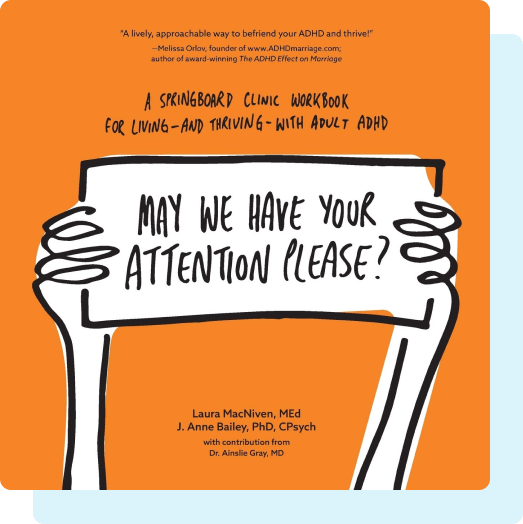
Tips for Families Managing Neurodiversity
ADHD expert Laura MacNiven, MEd, co-founder of Springboard Clinic, who focuses on helping families navigate ADHD from childhood to adulthood. Along with her colleague Dr. Chris Richards-Bentley, this panel will answer your pre-submitted parent questions and offer practical strategies and take-aways.
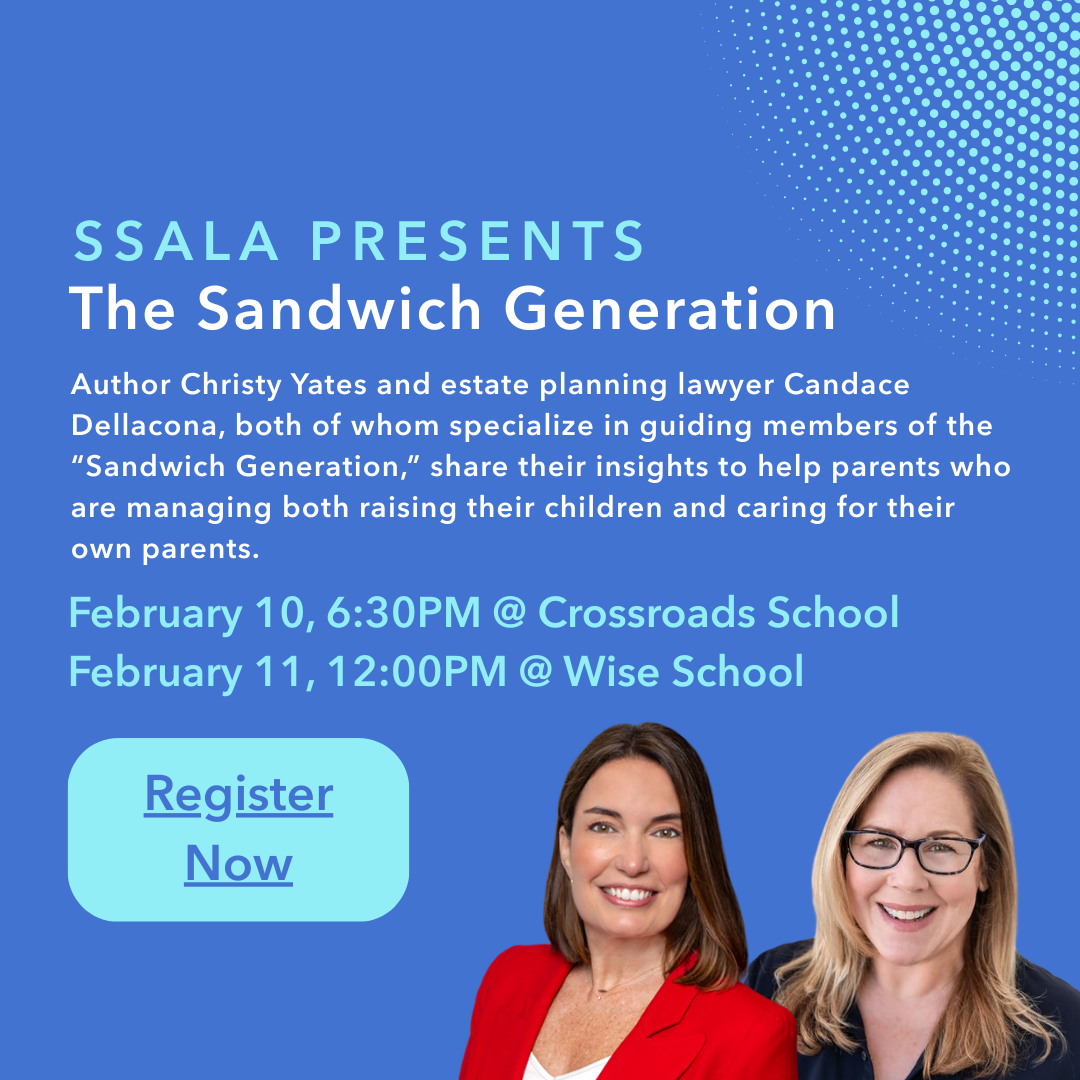
The Sandwich Generation: Caring for Kids and Parents
Feb 10th at Crossroads School and Feb 11th at The Wise School: Did you know that 63 million Americans are caring for aging parents, while 1 in 3 are also raising their children? Welcome to the "sandwiched" generation - you are not alone! CBS contributor, podcaster and principal at Offit|Kurman, lawyer/estate planner Candace Dellacona, along with psychologist, podcaster and author Christy Byrne Yates (Building a Legacy of Love) offer insightful tips and practical approaches to communicating with parents and children. Access useful take-aways to start the process or build upon your existing plans.

Dr. Lisa Damour: A Pragmatic Approach to Kids and Social Technologies
Parents and caregivers often wonder when—and how—to introduce social technologies to their kids. In this noontime webinar, Dr. Lisa Damour outlines how adults can set pragmatic boundaries, address the harms of problematic social media use, and keep the lines of communication open. She will also take up the timely question of young people turning to AI for advice or companionship, and what parents and caregivers should know about this new trend.
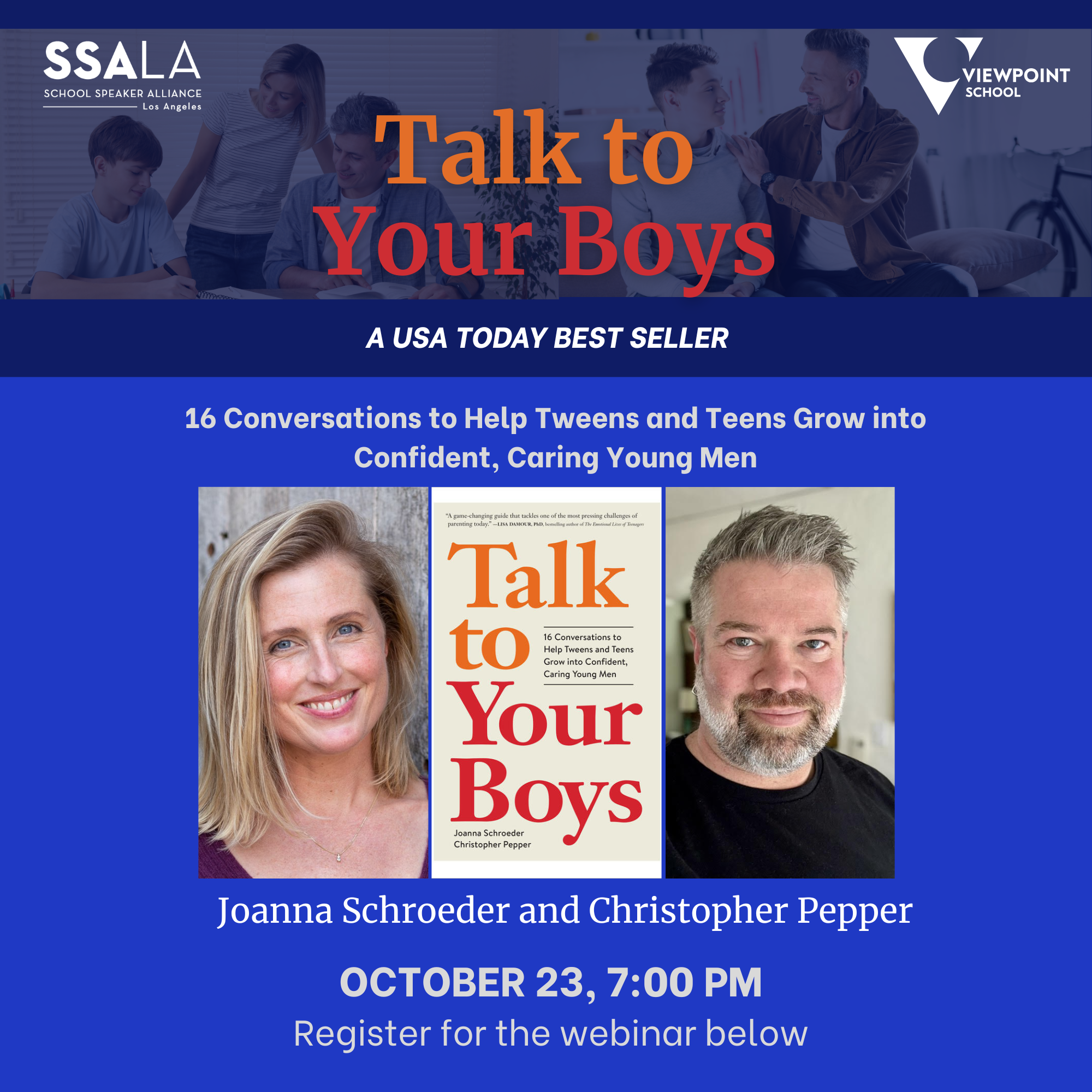
Talk to Your Boys
Raising boys today can feel overwhelming, but the good news is that the most powerful tool we have is also the simplest: talking to them. In Talk to Your Boys: 16 Conversations to Help Tweens and Teens Grow into Confident, Caring Young Men, journalist Joanna Schroeder and educator Christopher Pepper share practical, compassionate ways to open up meaningful conversations with the boys in our lives. Based on insights from more than 80 boys and leading experts, this book shows us that while talking isn’t always easy, it’s always worth it.
Dr. Becky Kennedy
Dr. Becky, a clinical psychologist, bestselling author, and mom of three, was named “The Millennial Parenting Whisperer” by TIME Magazine, and is rethinking the way we raise our children. She specializes in attachment, mindfulness, emotion regulation, and internal family systems theory, and translated those ideas into simple, actionable strategies for parents to use in their homes. Dr. Becky’s goal is to empower parents and care-givers to feel sturdier and more equipped to manage the challenges of parenting.

Dr. Tina Payne Bryson
The Power of Showing Up (Co-hosted with Carlthorp School)
In this in-person and live-streamed.recorded presentation, Dr. Bryson shared what kids from Kinder to 12th grade need most in order to be resilient and how to weather adversity. Based on her book The Power of Showing Up (co-authored with Dan Siegel), whether it's grief, challenging behaviors, or other concerns you may have, for the moments you aren’t sure what to do, or say, or how to help your child, Dr. Bryson will provide you with a “north star” that can guide you in the moment and over time.

Dr. Lisa Damour
Navigating the Emotional Lives of Our Children
With so many of today’s teens contending with academic pressure, social media stress, worries about the future, and concerns about their own mental health, it’s easy for them—and their parents—to feel anxious and overwhelmed. But it doesn’t have to be that way. Dr. Lisa shares her insights and discusses Untangling 10to20, a digital library of premium content to support teens and those who care for them. NYTimes bestselling author of Untangled, Under Pressure, and The Emotional Lives of Teenagers, Lisa also co-hosts the popular Ask Lisa podcast, works in collaboration with UNICEF, and is recognized as a thought leader by the American Psychological Association.

Dr. Jonathan Haidt
The Anxious Generation - What Parents Can Do Now
NYTimes bestselling author (The Anxious Generation) and social psychologist, Haidt explores why boys have been withdrawing from the real world, into a virtual one, and why social media damages girls more than boys. He argues that the "great rewiring of childhood" has interfered with Gen Z's social and neurological development, including sleep issues, perfectionism, attention fragmentation, and social comparisons. Moderated by former SSALA Chair, Dr. Susan Kresnicka, Haidt issued a clear call to action and proposes steps that parents, teachers, schools, tech companies, and governments can take to solve this current health crisis.
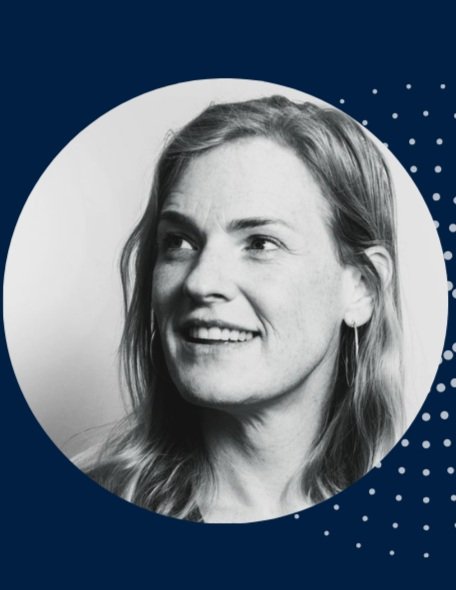
Dr. Vivienne Ming
The Future of Artificial Intelligence & Our Kids
Part two of our Artificial Intelligence series this year, join award-winning AI expert, neuroscientist and entrepreneur Dr. Vivienne Ming as she illuminates how technology can help humans maximize their potential. In-person + LiveStream at Brentwood School.
Member school staff/faculty invited to pre-event private luncheon.
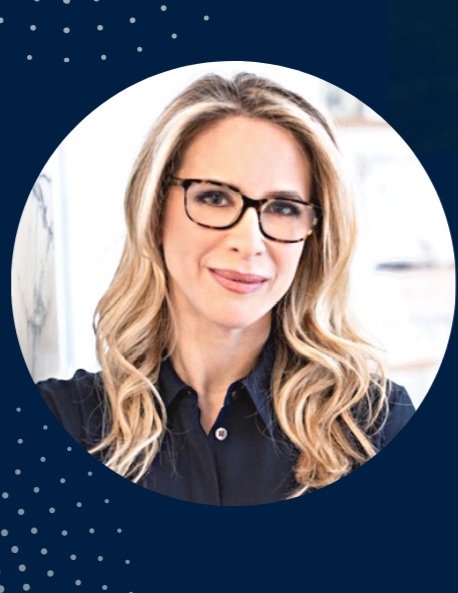
Dr. Aliza Pressman
The Five Principles of Parenting
Developmental psychologist Dr. Aliza Pressman charts a manageable course for Raising Good Humans that aligns with your family’s values and your children’s unique temperaments. From TK to Tween, Dr. Pressman doesn’t presume to have the one “right” way to parent, instead she offers practical strategies that support adults making the best choices for their own families. In-person + LiveStream at Crossroads School.
Member school attendees provided lunch, copy of book, and book signing.

Dr. Cara Natterson & Vanessa Kroll Bennett
This is So Awkward: Modern Puberty Explained
New York Times best-selling author/pediatrician Cara Natterson, MD and writer/educator Vanessa Kroll Bennett share their ultimate roadmap for adults helping Tweens and Teens navigate the rollercoaster of puberty. In-person + LiveStream at Viewpoint School.
Member school faculty offered pre-event curriculum meeting. Attendees provided breakfast, copy of book and book signing.

Dr. Jessica Meir, NASA Astronaut
Hear the inspirational journey of NASA Astronaut Dr. Jessica Meir. Born to Israeli and Swedish immigrants, she made history with the first all-female spacewalk at the International Space Station in 2019. A scientist who researched the physiology of animals in extreme environments before joining Lockheed Martin to test human limits as an aquanaut in NASA’s Extreme Environment Mission Operations (NEEMO), learn about the unexpected turns on the road to achieving her dream of becoming an astronaut.
Member school students offered to pre-submit questions, attend private pre-event meeting with Dr. Meir, and participate in live event.
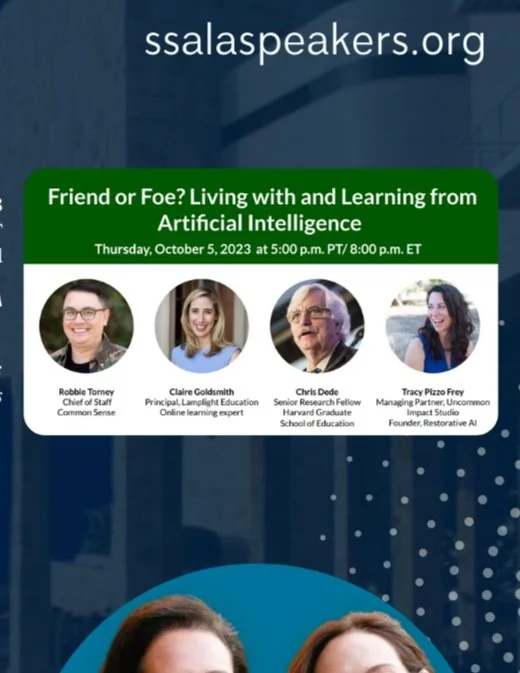
AI 101 for Parents
Part one of our Artificial Intelligence series this year, we want to better understand AI at the ground level: what is it, how is it being utilized by our children, and what is our role as parents? Hosted by Common Sense Media’s Connected Schools Program, Friend or Foe? Living with and Learning from Artificial Intelligence is for parents of children of all ages.
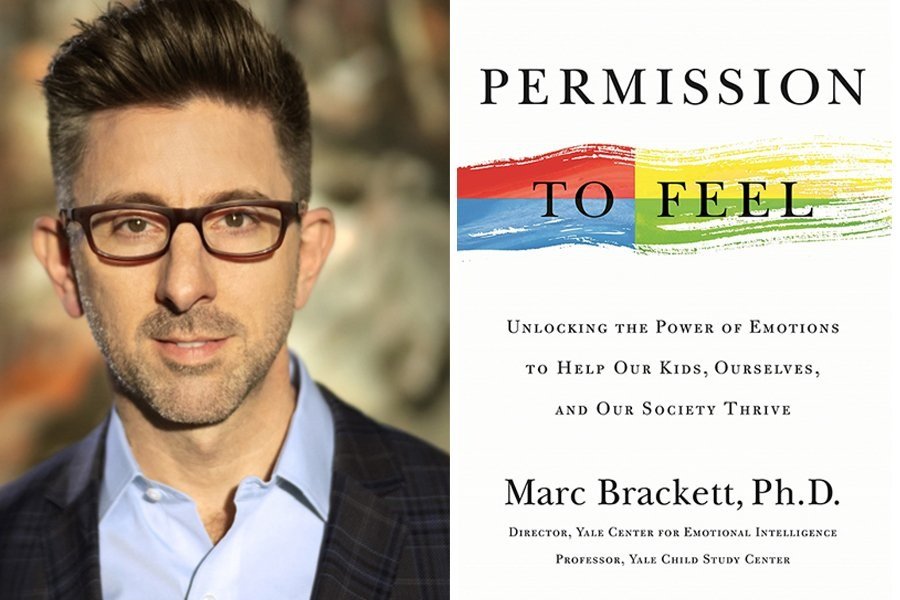
Marc Brackett, Ph.D
The Power of Emotional Intelligence to Achieve Well-being and Success at Home, School, and Work
Author of the bestseller Permission to Feel and the founding director of the Yale Center for Emotional Intelligence, Marc shared his evidence-based approach to social and emotional learning by exploring the value of emotions, and the skills associated with using them wisely, to encourage healthier, more resilient children. 
Dr. Thomas Curran
How Increasing Perfectionism Is Harming Our Children And What We Can Do About It
Dr. Thomas Curran studies how the rising tide of perfectionism - in our parenting, social media feeds, schools, universities, and workplaces - is driving an increase in mental health conditions among young people. In doing so, he tries to answer the questions: Why is this happening? And what can we do about it?
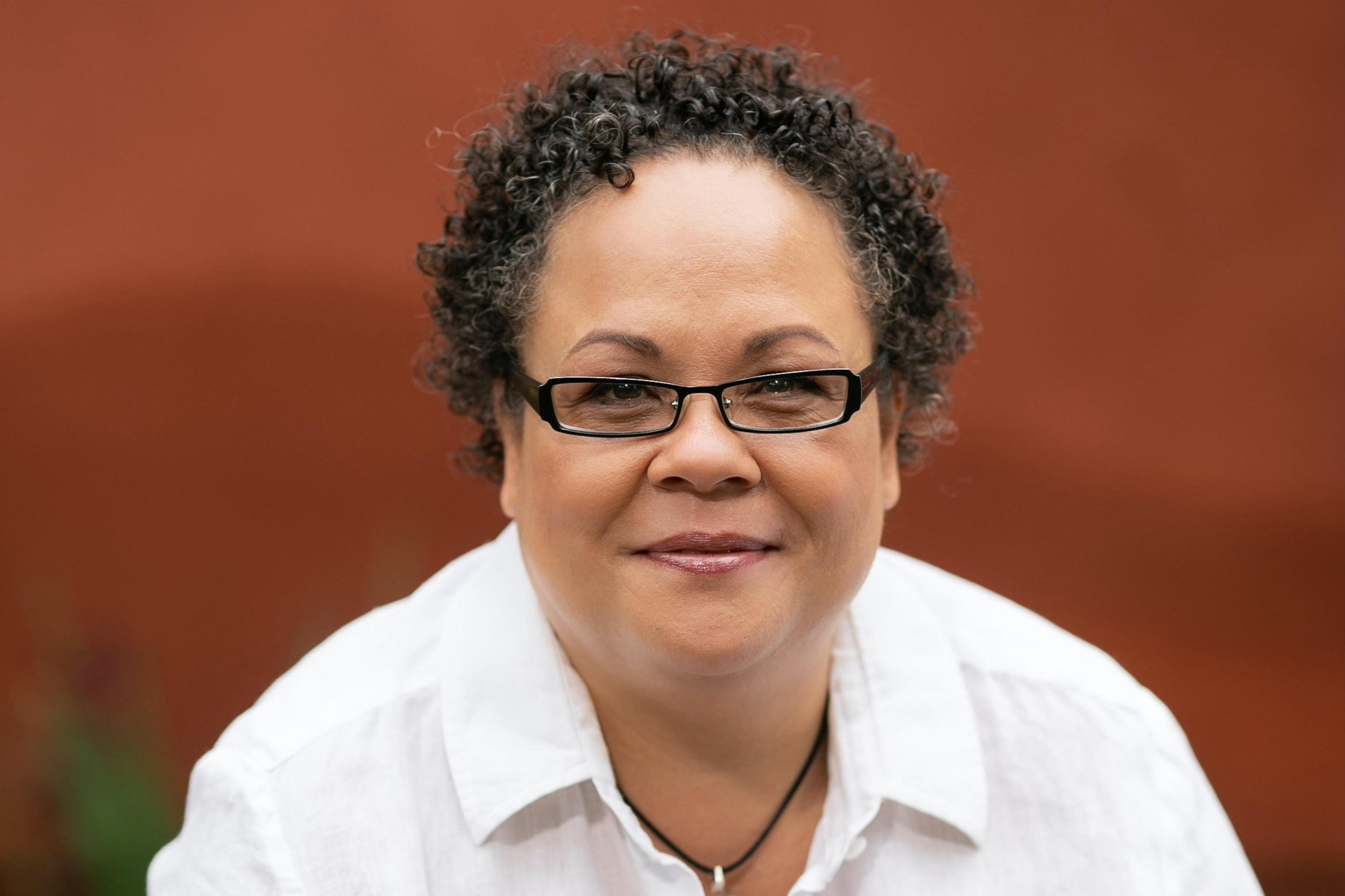
Julie Lythcott-Haims
Raising an Adult & Becoming an Adult
New York Bestselling Author of How to Raise and Adult shared her insights on preparing for an authentic, resilient adult life during two SSALA events - one for adults, and one for students.
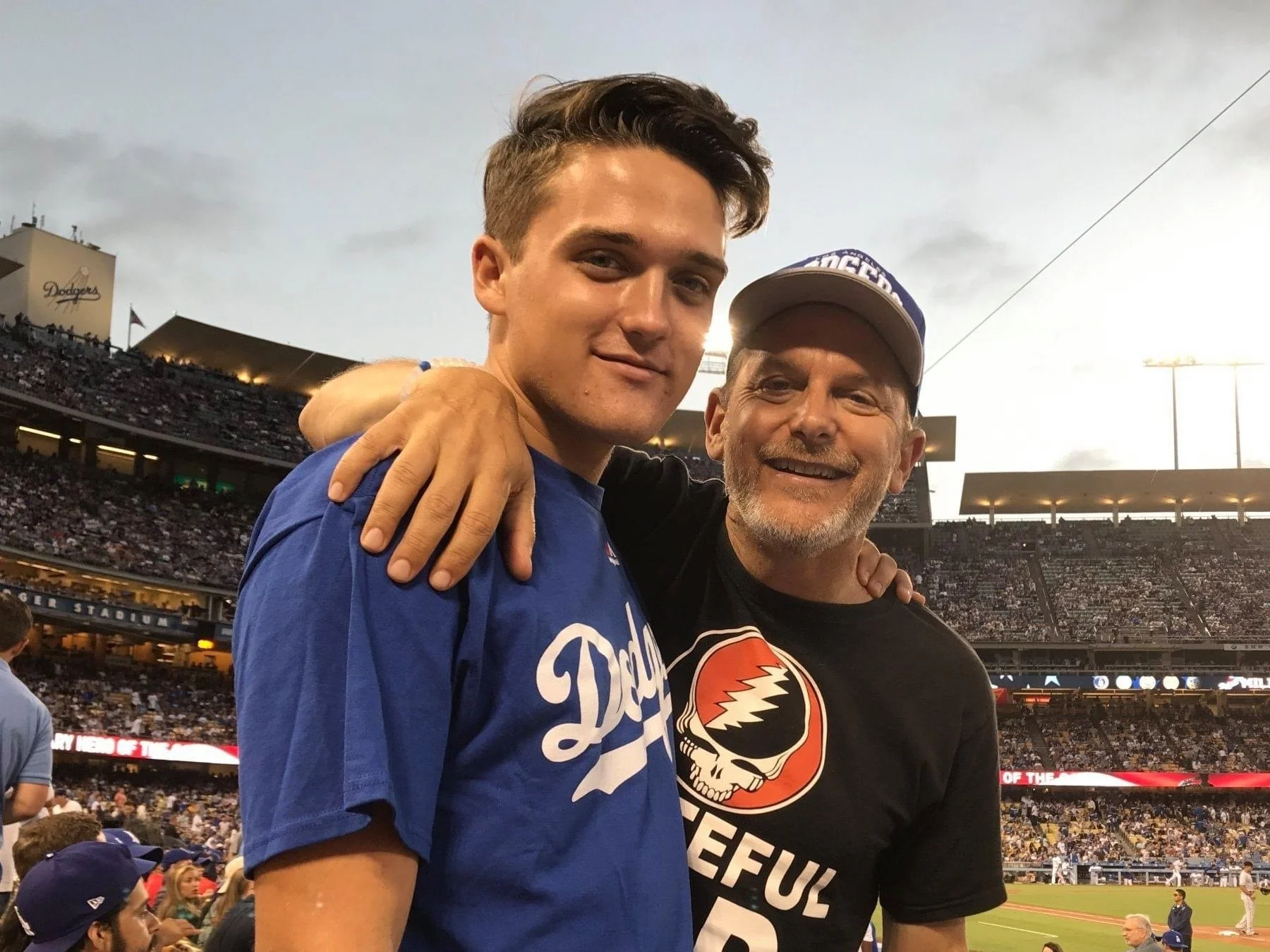
Tim & Ryder Davis
Recognizing and Navigating Mental Health Challenges in Tweens and Teens
Now more than ever, understanding the risks, signs, and helpful responses related to mental health conditions in our families is vital. Tim Davis (National Alliance on Mental Illness), and his son, Ryder, share their personal experience with Ryder’s bipolar diagnosis and provide practical information for navigating mental health conditions in our families.

Loretta J. Ross
Raising Kids Amidst “Call Out” Culture
What does healthy, effective standing up look like in an era of social media and political tribalization? An equality activist for 50 years, professor Loretta J. Ross discussed the dangers of call out culture and explored more productive approaches to standing up for what’s right.
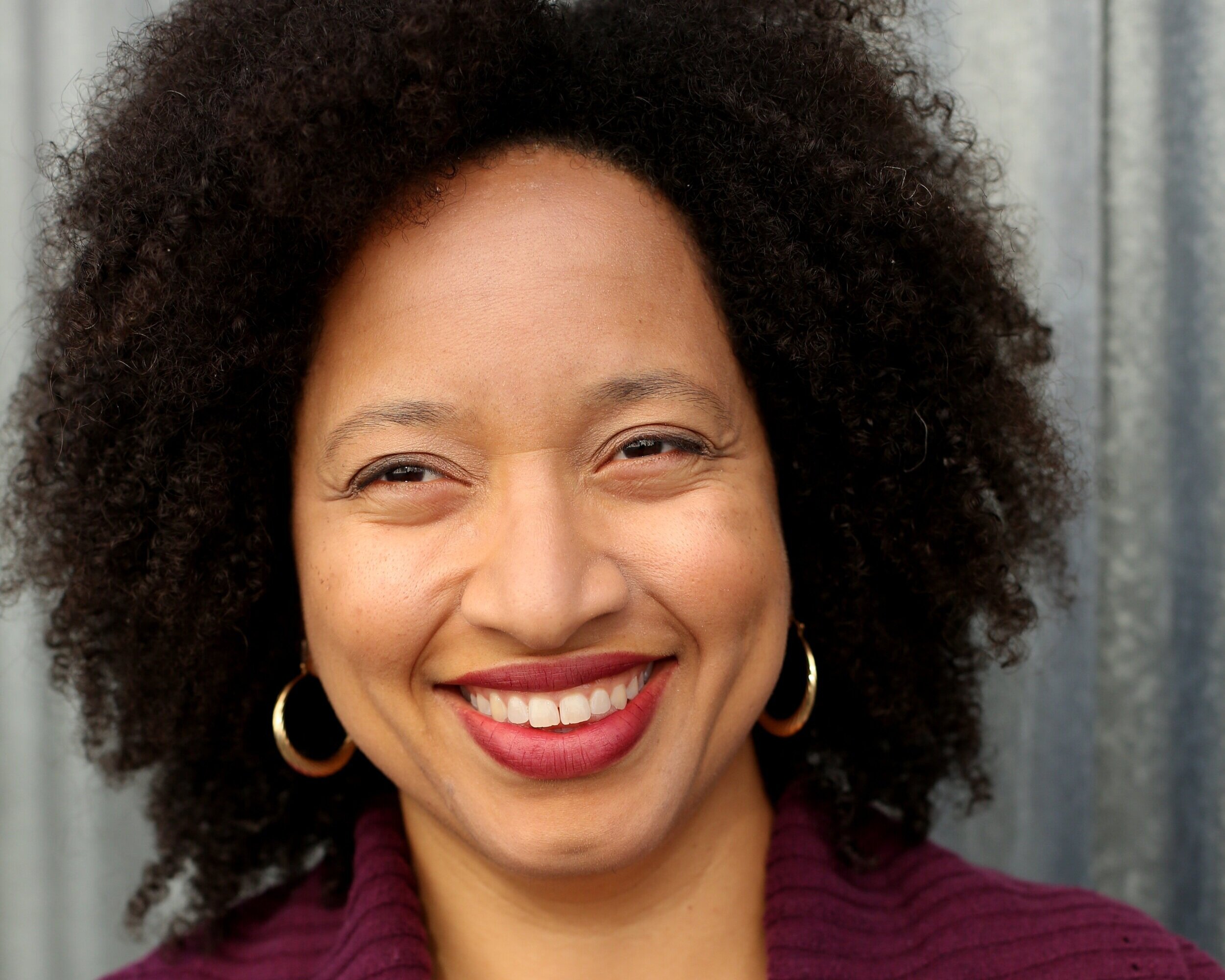
Dr. Allison Briscoe-Smith
How to Talk with Your Tweens and Teens about Race and Bias
Our country’s ongoing reckoning with race has become increasingly intense and complex. Dr. Briscoe-Smith, clinical psychologist and the Director of Diversity, Equity, and Inclusion at the Wright Institute, speaks on helping teens (and their parents) navigate racism, bias, discrimination, inequality, and civil unrest, today.

Dr. Jennifer Lang
The Consent Conversation: Ground Zero for Healthy Sexuality
The way teens and young adults think and talk about sex today has changed. Dr. Lang provided insight into the tools for communicated and understanding consent, as well as critical information about the capacity to give consent and the language surrounding it.

Dr. Zelana Montminy
Forget Happiness - Master Resilience Instead
Research shows lasting success and contentment aren’t about happiness after all - truly thriving in today’s world requires resilience. Behavioral Scientist Dr. Montminy explained what it takes to create a resilient mindset for ourselves and for our children, how to shift perceptions, and deliver tools we can use to flourish.

David & Nic Sheff
A Frank Conversation about the Disease of Addiction
America’s drug crisis is one of the greatest public health challenges of our time, affecting families from all walks of life. David & Nic shared their very personal and emotional journey through addiction and recovery with SSALA.

Dr. Jonathan Haidt
The Fragile Generation: Are Bad Policy and Paranoid Parenting Making Kids Too Safe to Succeed?
Rates of anxiety, depression, and suicide are rising - on campus as well as nationally. How did this happen, and what can we do about it? Dr. Jonathan Haidt, social psychologist and NYT best selling author, explored these issues and possible solutions.

Dr. Jean Twenge
iGen: The Smart Phone Generation & Finding a Balance with Technology
More than previous generations, our children are obsessed with safety, focused on tolerance, and have no patience for inequality. Dr. Jean Twenge addressed how iGen is growing up more slowly than previous generations, the unique challenges they face as a result, and practical tools to utilize to meet their developmental needs and encourage their independence and autonomy.

Mitch Prinstein, Ph.D.
Popularity in School: How Likeability, not Status, Can Provide a Lifetime Advantage
Dr. Prinstein, a board-certified clinician in child and adolescent psychology, spoke on the value of positive popularity, and why it’s better for our students to liked and respected than envied and feared.